Microwave cooking often gets a bad rap, but it’s time to change that perception. It’s not just a tool for reheating last night’s pizza; it’s a culinary powerhouse waiting to be unleashed. With a few clever tips, anyone can turn their microwave into a gourmet kitchen assistant.
Imagine whipping up a fluffy mug cake in under five minutes or steaming veggies to perfection without losing their vibrant colors. These microwave cooking tips will not only save time but may also impress friends and family. So, buckle up and get ready to discover how to make the most of that magical box on your countertop. Who knew quick meals could be this fun?
Understanding Microwave Cooking
Microwave cooking offers a modern way to prepare food quickly and efficiently. Mastering microwave techniques can elevate culinary experiences.
How Microwaves Work
Microwaves utilize electromagnetic radiation to heat food. Waves excite water molecules in the food, causing them to vibrate and produce heat. This method ensures even heating throughout the dish. Unlike conventional ovens, microwaves cook food from the inside out. When using a microwave, metallic objects create sparks and potentially damage the appliance, so they should always be avoided in microwave cooking.
Benefits of Microwave Cooking
Microwave cooking brings numerous advantages. It saves time, enabling quick meal preparation. Nutrient retention is another major benefit, as short cooking times preserve important vitamins. Energy efficiency is key; microwaves typically consume less energy than traditional ovens. Additionally, the appliance minimizes cooking mess, as fewer pots and pans are required. Cooking versatility enhances meal options, allowing users to bake, steam, or reheat effortlessly.
Essential Microwave Cooking Tips
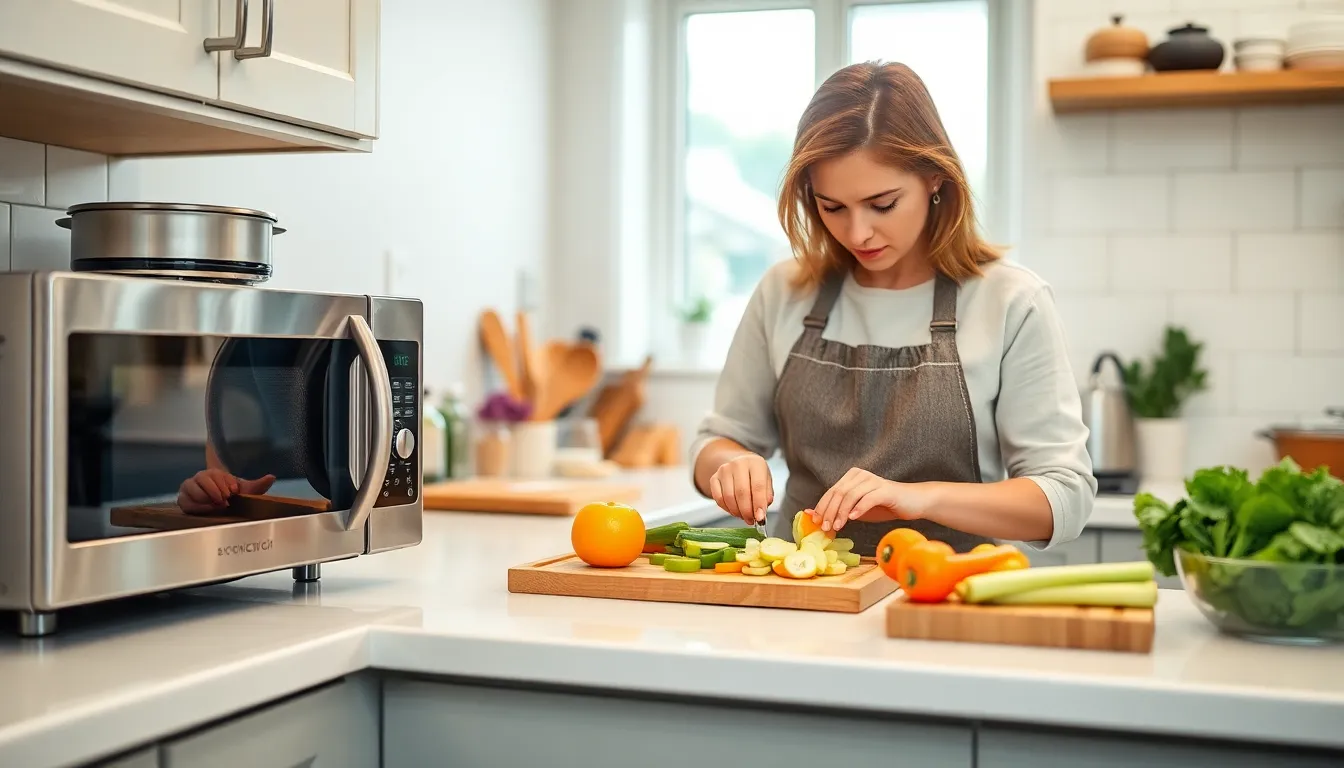
Microwave cooking offers a range of benefits, making it an ideal choice for quick meal preparation. Here are essential tips to enhance the microwave cooking experience.
Choosing the Right Microwave
Microwaves come in various types, including countertop, built-in, and over-the-range models. Countertop microwaves provide flexibility as users can place them anywhere in the kitchen. Over-the-range options save space while integrating with kitchen cabinetry. Wattage varies significantly; models with 900 to 1200 watts cook food more evenly and quickly. Size also matters; larger units accommodate bigger dishes but may occupy more counter space. Look for features such as sensor cooking, which adjusts cooking times automatically, ensuring optimal results.
Preparing Food for Microwaving
Preparation directly affects cooking efficiency and food quality. Cutting food into even sizes promotes consistent heating. Using microwave-safe containers prevents harmful chemical leaching into food. Venting lids or covering dishes with microwave-safe wraps maintains moisture and prevents splatter. Stirring food halfway through cooking encourages even heat distribution. Adding water to vegetables keeps them hydrated, enhancing their texture and color. Following these steps results in delicious, evenly cooked meals every time.
Cooking Techniques in the Microwave
Microwave cooking offers various techniques that enhance meal preparation efficiency and quality.
Steaming with the Microwave
Steaming vegetables in the microwave retains their vibrant colors and nutrients. Placing vegetables in a microwave-safe bowl with a small amount of water creates a steaming effect. Cover the bowl with a microwave-safe lid or vented wrap to trap steam. Cooking time varies by vegetable size and type, typically ranging from 2 to 5 minutes. Broccoli, carrots, and green beans are excellent choices for quick steaming. Check for doneness by piercing with a fork; if it slides easily, the vegetables are ready. This method preserves flavors while offering a healthy cooking option.
Defrosting Effectively
Defrosting in the microwave provides a quick way to prepare frozen foods. Most modern microwaves feature a defrost setting that automatically adjusts power levels and cooking time based on food weight. Place the food in a microwave-safe container to prevent splatters. Rotating or flipping items halfway through helps ensure even thawing. For best results, monitor closely to avoid partial cooking. Meat, poultry, and seafood typically require 5 to 10 minutes, depending on size. This method reduces preparation time without compromising safety or flavor.
Common Mistakes to Avoid
Microwaving food can be simple, but certain mistakes can hinder the results. Identifying common issues can help improve the cooking experience.
Overcooking and Undercooking
Overcooking food results in dry, unappetizing dishes. Monitoring cooking times closely prevents excessive heat exposure. Undercooking can lead to food safety concerns, especially with proteins. Checking food’s internal temperature ensures safety and doneness. Using a microwave-safe thermometer offers quick monitoring. Stirring food halfway allows for even cooking throughout. Timing adjusts based on the wattage of the microwave, making lower wattages susceptible to undercooking. Keeping these points in mind enhances microwave cooking precision.
Using Inappropriate Containers
Using inappropriate containers can damage both the food and the microwave. Metal containers should always be avoided due to potential sparks. Instead, opting for glass or microwave-safe plastic ensures safety and proper heating. Plastic wrap is useful but must be vented to prevent steam buildup. Additionally, checking for microwave-safe labels on containers is crucial. Containers made of materials not intended for microwave use may warp or leach harmful chemicals. Always selecting suitable containers contributes to a better cooking experience and preserves food quality.
Microwave cooking opens up a world of culinary possibilities that many overlook. By embracing the tips shared, anyone can transform their microwave into a powerful kitchen ally. Whether it’s whipping up a quick mug cake or steaming vibrant vegetables, the benefits of microwave cooking are undeniable.
With the right techniques and tools, meal prep becomes efficient and enjoyable. It’s time to break free from the stigma and explore the versatility of microwaves. By experimenting with different recipes and methods, home cooks can discover just how delightful and convenient microwave cooking can be.