Packing up a kitchen can feel like trying to solve a Rubik’s Cube blindfolded. Between the endless pots and pans and that collection of mismatched Tupperware, it’s easy to get overwhelmed. But fear not, because with the right kitchen packing hacks, moving can become a breeze rather than a culinary catastrophe.
Essential Kitchen Packing Hacks
Packing a kitchen doesn’t have to feel overwhelming. Implementing strategic hacks can streamline the process.
Decluttering Before Packing
Begin by sorting through kitchen items. It’s critical to evaluate each item’s usefulness. Donate appliances and utensils seldom used in the past year. This reduces clutter and simplifies packing. Creating separate piles for keep, donate, and discard eases decision-making. Consider using boxes to categorize items as decisions are made. This one-step approach fosters an organized packing experience.
Organizing Your Kitchen Items
Organize items by categories to enhance efficiency. Group similar items like dishes, utensils, and cookware together. This system simplifies unpacking later. Take advantage of vertical space by stacking pots and placing lids vertically. Wrap fragile items like dishes in clothing or kitchen towels for padding. Label boxes clearly to identify contents quickly. Employing color-coded labels offers visual guidance during unpacking. Prioritizing organization when packing saves time and effort in the new kitchen.
Packing Techniques for Efficient Use of Space

Effective packing techniques maximize space and simplify the moving process. Utilizing stackable solutions and evaluating folding versus rolling methods can significantly enhance efficiency.
Using Stackable Containers
Stackable containers provide an organized way to store kitchen items. These containers save space, as they can be easily stacked on top of one another. Choose clear plastic containers to quickly identify contents. Label each container to enhance clarity during unpacking. Nesting pots and pans also reduces space. Consider using vacuum-seal bags for soft items like linens. Additionally, use stackable bins for pantry items to create more room. Efficient container use prevents wasted space and optimizes storage.
The Roll vs. Fold Debate
Rolling kitchen textiles offers advantages in space saving. Rolled items fit better in boxes and avoid creases. This method works well for dish towels and table linens. Folding, however, provides a neater appearance for presentation. Heavier items like tablecloths maintain form better when folded. Some individuals prefer a combination of both methods for flexibility. Encouraging experimentation can ensure they find the best approach for their needs. Ultimately, prioritizing space efficiency and accessibility simplifies unpacking later.
Protecting Your Kitchenware
Effective protection of kitchenware during a move is essential to prevent damage. Proper wrapping and choosing the right packing materials makes this easier.
Wrapping Breakable Items
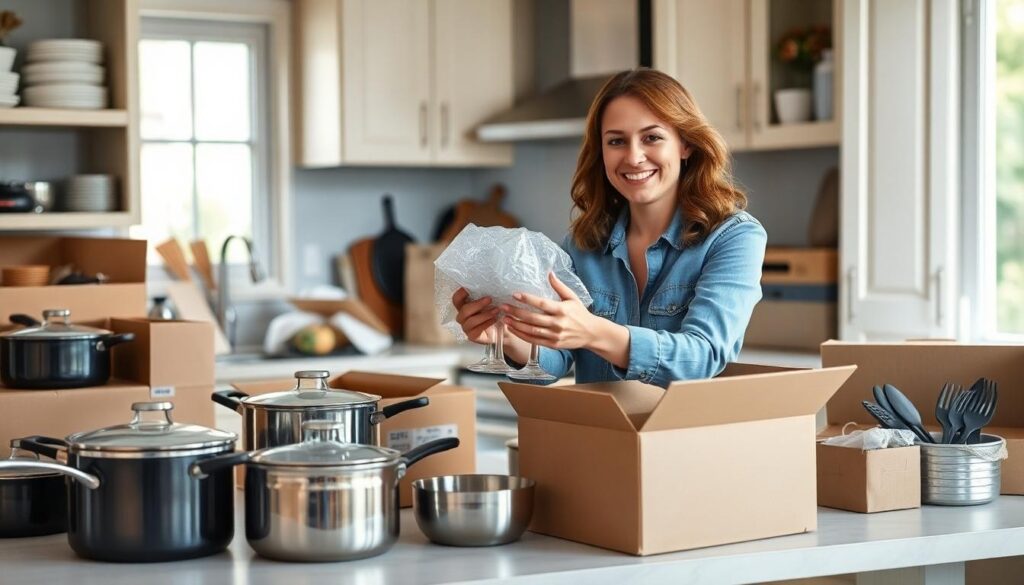
Wrap breakable items like glassware and ceramics with bubble wrap for extra cushioning. Use paper or dish towels in addition to bubble wrap to fill gaps and prevent movement. Ensure that each piece is covered thoroughly, especially delicate items. Placing wrapped items upright in boxes reduces the risk of breakage. Label boxes containing fragile items clearly to alert handlers.
Choosing the Right Packing Material
Choosing suitable packing materials significantly affects protection. Opt for sturdy, reinforced boxes that can withstand weight and pressure. Use packing tape designed for sealing boxes securely. Consider using packing peanuts or crumpled paper as a filler to minimize shifting during transport. Biodegradable options offer an eco-friendly alternative while still providing adequate protection. Prioritize materials that enhance visibility, such as clear plastic containers, for organization and easy access.
Tips for Quick Unpacking
Unpacking the kitchen efficiently saves time and reduces stress. Prioritize unpacking essential items first, such as pots, pans, and utensils. Placing these frequently used items within easy reach makes meal preparation seamless.
Group items together by category. Kitchen appliances, cookware, and dining essentials should be unpacked in their respective areas. Designating zones helps create an organized space, ensuring everything has a home.
Utilize boxes that are clearly labeled. Knowing which box contains dishware or utensils means less searching and more unpacking. During the move, keep a packing list handy that outlines the contents of each labeled box.
Start with the largest items, such as your cookware and appliances. These occupy significant space and create a foundation for the rest of your kitchen. As you unpack, fill in smaller items like spices and utensils around the larger pieces.
Consider using a buddy system for unpacking. Collaborating with a friend or family member speeds up the process. As one person unpacks, the other can put items away, creating teamwork that accomplishes more in less time.
Refrain from overwhelming yourself with everything at once. Focusing on one section of the kitchen at a time simplifies the process and keeps the area organized. It’s possible to finish one zone before moving to the next.
Finally, take breaks to avoid fatigue. Unpacking can be physically demanding, so step away for a moment if feeling overwhelmed. Resting allows for recharging and maintaining focus on setting up the new kitchen efficiently.
Packing a kitchen doesn’t have to be a daunting task. By implementing these kitchen packing hacks, anyone can transform a chaotic process into a streamlined experience. Prioritizing decluttering and organizing items not only saves time but also eases the unpacking journey.
Using protective materials for fragile items ensures they arrive safely at the new location. Choosing the right packing supplies enhances efficiency and minimizes the risk of damage. With a bit of planning and creativity, packing a kitchen can become a manageable part of any move. Embracing these strategies will lead to a smoother transition and a more enjoyable settling-in process.